The executives who struggle the most are rarely the ones who lack capability. In fact, they are often the opposite. They are competent, trusted, and consistently high-performing. From the outside, things look fine, sometimes even impressive. Careers progress, responsibilities grow, and results are delivered. There is little in their performance to suggest that anything is wrong.
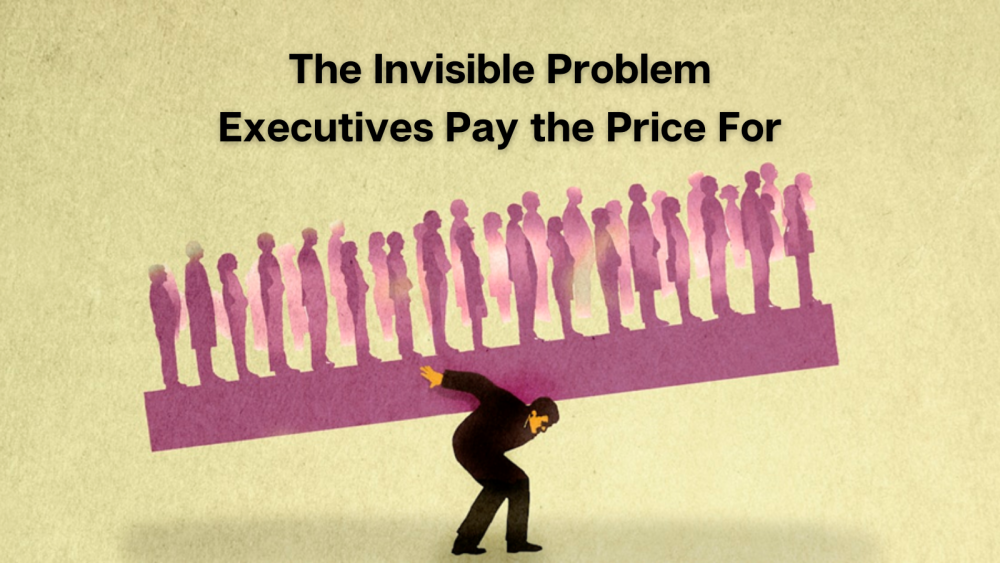
What’s harder to see is what’s happening internally. The quiet friction that builds beneath the surface. The constant inner negotiation. The invisible load they carry with them from meeting to meeting and decision to decision. It’s the unspoken tension between who they are expected to be and what they are actually holding. The emotional weight of decisions that affect other people’s lives. The pressure of being the steady one. The responsibility that doesn’t switch off when the day ends and the calendar clears.
This inner friction rarely announces itself loudly. It doesn’t show up on performance dashboards or in quarterly reviews. Instead, it reveals itself in subtler ways. Leaders begin to over-function, doing more than is required just to stay ahead. They second-guess decisions, even after years of sound judgment. They absorb emotional weight that isn’t theirs to carry, all while maintaining a composed, capable exterior. On the outside they remain strong, while on the inside they quietly feel depleted.
Many leaders don’t talk about this, not because it isn’t real, but because it’s difficult to put into words. And because senior roles rarely leave room for this kind of honesty. There is an unspoken expectation to have it together, to be resilient, to manage complexity without revealing the personal cost. So the friction stays unnamed, carried privately, often for years.
Most leadership programs never enter this space. They focus on skills, strategies, and frameworks, important tools without question. But they are not sufficient. Because this isn’t a skills gap. It’s a friction problem. And friction, when left unaddressed, creates drag. It slows decision-making, drains energy, and quietly erodes clarity and confidence over time.
This is where executive coaching does its real work. Not by adding more tools to an already full toolbox, but by creating space. Space to put some of the weight down. Space to separate what truly belongs to you from what you’ve been carrying for others. Space to think without performing, to reflect without being evaluated. Space to reconnect with your own authority, without forcing it.
When that inner friction begins to ease, something shifts. Decisions feel cleaner and less charged. Energy returns in a more sustainable way. Leadership becomes less effortful and more grounded. Not louder. Not harder. Just clearer.
If any of this feels familiar, you’re not alone. Many capable, thoughtful leaders carry this quietly for years, assuming it is simply part of the role. But you don’t have to work through it alone. Sometimes, the most meaningful progress doesn’t come from pushing forward, but from removing what’s been weighing you down.